Company Guides⏱ 8 min read
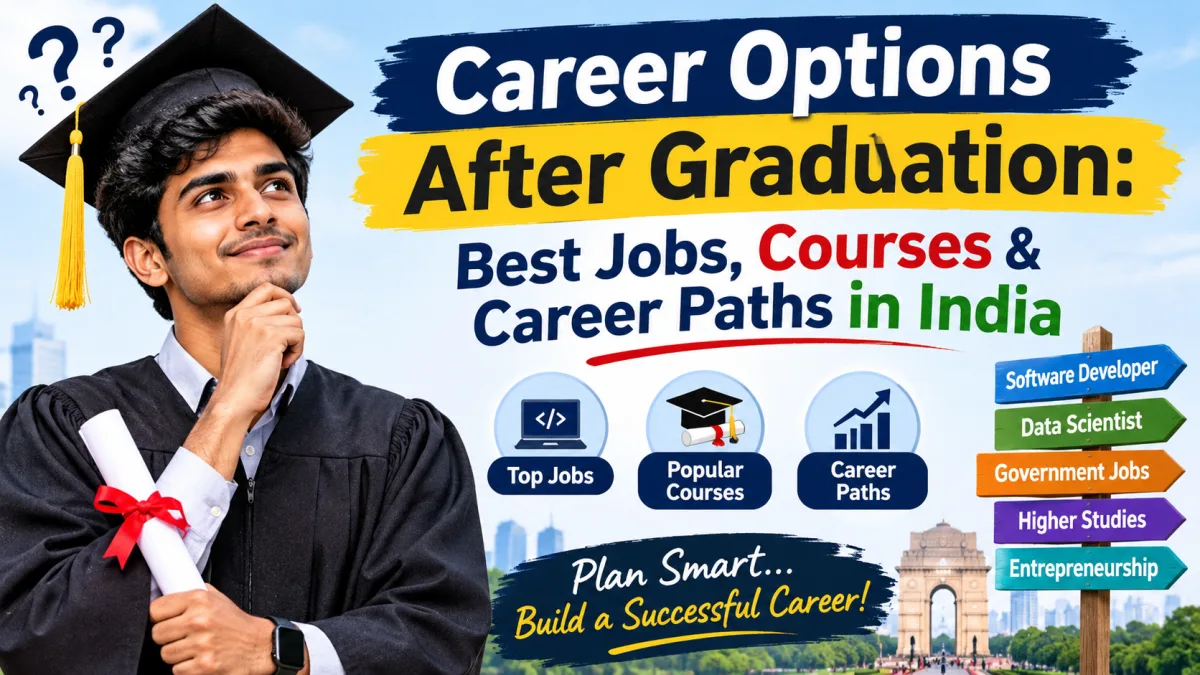
Career Options After Graduation: Best Jobs, Courses & Career Paths in India
Confused about what to do after graduation? Explore the best career options in India, including private-sector jobs, government examinations, higher education, professional courses, freelancing, and emerging career opportunities for graduates.
Introduction: What to Do After Graduation?
Completing graduation is a major milestone, but it also brings an important question: What should I do next? After spending several years studying, graduates often feel confused about their future. Some want to get a job immediately, while others consider pursuing a master's degree, preparing for competitive examinations, or learning new professional skills. There is no single correct answer because every student has different interests, financial situations, educational backgrounds, and career goals. For example, a BCom graduate may be interested in accounting, banking, finance, or business management. A BTech graduate may explore software development, data science, cybersecurity, or government technical positions. Similarly, a BA or BSc graduate can build a career in education, administration, research, marketing, and many other fields. The key is to understand the available opportunities before making a decision. If you have recently completed your degree or are about to graduate, this guide will help you understand the best career options after graduation in India and how to prepare for your next step.Why Is Choosing the Right Career After Graduation Important?
Graduation provides academic knowledge, but building a successful professional life requires planning, practical experience, and continuous learning. Choosing the right career direction can help you:- Develop skills that are relevant to your chosen industry.
- Find employment opportunities that match your qualifications.
- Improve your earning potential over time.
- Build professional confidence and independence.
- Avoid spending time and money on courses that do not support your goals.
- Create a clear direction for your long-term professional growth.
Best Career Options After Graduation in India
There are several career paths available to graduates in India. Your options will depend on your degree, interests, skills, and the eligibility requirements of individual employers or institutions. Let's explore some of the most popular choices.1. Private Sector Jobs
Getting a private-sector job is one of the most common choices after graduation. Private companies hire graduates across industries such as information technology, banking, finance, healthcare, education, marketing, consulting, manufacturing, and e-commerce. Depending on your qualification, you can apply for entry-level positions and gradually develop your professional experience. Some popular job roles include:- Software Developer
- Business Development Executive
- Digital Marketing Executive
- Human Resource Executive
- Accountant
- Customer Support Associate
- Sales Executive
- Data Analyst
- Operations Executive
- Content Writer
2. Government Jobs
Government employment remains an attractive career choice for many Indian graduates. These positions appeal to candidates who are interested in public service, administrative responsibilities, financial institutions, and various government departments. Depending on the examination and recruitment notification, graduates may be eligible for different government positions. Some popular government examination opportunities include:- UPSC Civil Services Examination: For candidates interested in administrative services such as IAS, IPS, and other civil services, subject to eligibility requirements.
- SSC CGL: For various Group B and Group C posts in central government departments and organisations.
- IBPS PO: For Probationary Officer recruitment in participating public-sector banks.
- SBI PO: For Probationary Officer positions in the State Bank of India.
- RRB NTPC: For eligible graduate-level positions in Indian Railways.
- State Public Service Commission Exams: For administrative and other state government positions.
- RBI Grade B: For eligible candidates interested in officer-level opportunities at the Reserve Bank of India.
3. Higher Education and Postgraduate Courses
Some graduates prefer to continue their education instead of immediately entering the job market. A postgraduate qualification can help develop specialised knowledge and may be necessary for certain professional, academic, or research careers. Popular postgraduate options include:- Master of Business Administration (MBA)
- Master of Computer Applications (MCA)
- Master of Commerce (MCom)
- Master of Science (MSc)
- Master of Arts (MA)
- Master of Technology (MTech)
- Master of Social Work (MSW)
- Master of Laws (LLM), where eligible
4. Career in Information Technology (IT)
The IT industry offers opportunities for graduates who are interested in computers, programming, software, networking, and digital technologies. You do not always need a computer science degree for every technology-related role. However, employers usually expect candidates to demonstrate the relevant technical knowledge and practical abilities required for the position. Some popular IT career options include:- Frontend Developer
- Backend Developer
- Full Stack Developer
- Java Developer
- Python Developer
- Software Tester
- Cloud Computing Associate
- Cybersecurity Analyst
- Database Administrator
- Technical Support Engineer
5. Digital Marketing
Digital marketing has become an important part of how businesses promote their products and services. Companies need professionals who understand online advertising, search engines, social media, content marketing, and customer engagement. Some career opportunities include:- SEO Executive
- Social Media Manager
- Digital Marketing Executive
- Performance Marketing Associate
- Content Marketing Specialist
- Email Marketing Executive
- Marketing Analyst
6. Banking and Finance
Banking and finance offer career opportunities for graduates from commerce, management, economics, mathematics, and other eligible educational backgrounds. You can explore both private-sector financial institutions and government banking recruitment examinations. Potential job roles include:- Banking Associate
- Probationary Officer
- Financial Analyst
- Accountant
- Credit Analyst
- Relationship Manager
- Investment Operations Associate
- Risk Analyst
7. Teaching and Education
Teaching can be a rewarding career for graduates who enjoy explaining concepts, helping students, and sharing knowledge. Depending on the level and type of educational institution, different teaching qualifications may be required. Some possible career paths include:- School Teacher
- Private Tutor
- Online Educator
- Subject Matter Expert
- Academic Content Developer
- Educational Counsellor
- Teaching Assistant
8. Freelancing and Self-Employment
Not every graduate wants a traditional full-time job. Freelancing offers an alternative for people who want to work independently, offer professional services, and build their own client base. Popular freelancing services include:- Website development
- Graphic designing
- Content writing
- Video editing
- Social media management
- SEO services
- Translation
- Online tutoring
- Virtual assistance
9. Entrepreneurship and Starting a Business
If you have a business idea and want to create something of your own, entrepreneurship may be worth exploring. You could start a digital service agency, an online store, an educational platform, a local business, or a technology-based startup. Some possible business ideas include:- Digital marketing agency
- Website development services
- Online educational platform
- E-commerce business
- Graphic design studio
- Technology consulting services
- Online content publishing business
10. Data Science and Artificial Intelligence
Data science and artificial intelligence are growing areas of technology that have created specialised career opportunities. Organisations use data and AI-based systems to automate processes, understand customer behaviour, improve products, and support decision-making. Some relevant career roles include:- Data Analyst
- Junior Data Scientist
- Machine Learning Engineer
- AI Developer
- Business Intelligence Analyst
- Data Engineer
- AI Research Assistant
Best Career Options After Graduation Based on Your Degree
One of the easiest ways to shortlist career opportunities is to begin with your undergraduate qualification. Here are some options based on popular graduation streams.Career Options After BA Graduation
A Bachelor of Arts degree provides opportunities in several fields, particularly those involving communication, administration, research, education, and social sciences. Popular career options include:- Government jobs through UPSC, SSC, and state examinations.
- Content writing and journalism.
- Human resources.
- Teaching and education.
- Digital marketing.
- Public relations.
- Social work.
- MBA and other postgraduate programmes.
Career Options After BCom Graduation
BCom graduates can explore opportunities in accounting, taxation, banking, finance, and business operations. Popular options include:- Accountant.
- Financial Analyst.
- Banking Professional.
- Tax Consultant.
- Auditing Associate.
- Business Analyst.
- Insurance Professional.
- MBA, MCom, or professional finance qualifications.
Career Options After BSc Graduation
BSc graduates can build careers in scientific research, laboratory operations, healthcare-related fields, technology, education, and data analysis. Some options include:- Research Assistant.
- Laboratory Technician, subject to relevant qualifications.
- Data Analyst.
- Scientific Content Writer.
- Quality Control Associate.
- Teacher or Academic Professional.
- MSc and specialised postgraduate programmes.
Career Options After BBA Graduation
BBA graduates can explore management, marketing, finance, human resources, and business development. Popular job roles include:- Business Development Executive.
- Marketing Executive.
- HR Executive.
- Operations Associate.
- Sales Executive.
- Management Trainee.
- Business Analyst, where suitably qualified.
- MBA and other management programmes.
Career Options After BCA Graduation
BCA graduates can pursue careers in software development, IT services, web development, databases, and technical support. Some popular opportunities include:- Web Developer.
- Software Developer.
- Java Developer.
- Python Developer.
- Software Tester.
- Database Developer.
- Technical Support Engineer.
- MCA or specialised technology courses.
Career Options After BTech Graduation
BTech graduates can explore technical, managerial, research, and government-sector opportunities. Depending on their engineering branch, possible careers include:- Software Engineer.
- Full Stack Developer.
- Data Analyst.
- Mechanical Engineer.
- Civil Engineer.
- Electrical Engineer.
- Cloud Engineer.
- Cybersecurity Professional.
- Government Engineering Positions.
- MTech and MBA programmes.
Best Professional Courses to Pursue After Graduation
If you are not ready to enter the job market, you can consider learning a professional skill or pursuing an additional qualification. The right course should help you develop abilities that employers actually need. Here are some popular options: Course Career Opportunities Suitable For Full Stack Development Web Developer, Software Engineer Technology enthusiasts Data Analytics Data Analyst, BI Analyst Analytical candidates Digital Marketing SEO, Marketing Executive Creative and business-minded candidates Cybersecurity Security Analyst, SOC Analyst Technology enthusiasts Cloud Computing Cloud Support, Cloud Engineer IT candidates UI/UX Design UI Designer, UX Designer Creative candidates Financial Modelling Financial Analyst Commerce and finance graduates Business Analytics Business Analyst Management and analytical candidates Project Management Project Coordinator Management-oriented candidates Before paying for any course, review its curriculum, practical assignments, instructor experience, certification value, and placement claims. A certificate alone does not guarantee a job. Focus on learning and demonstrating the skills.High-Demand Skills to Learn After Graduation
Your degree provides an academic foundation, but employers also look for practical abilities that can be used in the workplace. Regardless of your graduation stream, consider developing the following skills.1. Communication Skills
Clear communication is important in almost every profession. Practise speaking confidently, writing professional emails, participating in discussions, and explaining your ideas.2. Computer and Digital Skills
Learn to use common workplace tools such as Microsoft Excel, Word, PowerPoint, Google Workspace, and online collaboration platforms.3. Problem-Solving
Employers value candidates who can understand problems, analyse information, and suggest practical solutions.4. Artificial Intelligence Literacy
Understand how AI tools work and how they can support research, productivity, analysis, and professional tasks. Also learn to verify AI-generated information rather than relying on it blindly.5. Industry-Specific Technical Skills
Choose skills according to your career path. For example, learn SQL for data-related roles, programming for software development, or SEO for digital marketing.6. Professionalism and Teamwork
Learn how to manage deadlines, accept feedback, collaborate with others, and take responsibility for your work.How to Get a Job After Graduation: Step-by-Step Guide
Finding your first job can feel challenging, especially when you have limited professional experience. A planned approach can make the process easier.Step 1: Identify Your Career Interest
Start by understanding what type of work interests you. Do you enjoy technology, finance, communication, management, teaching, or creative activities? Shortlist two or three possible career directions before selecting one.Step 2: Build the Required Skills
Study job descriptions for entry-level positions in your preferred field. Identify the skills employers commonly mention and prepare a learning plan to develop them.Step 3: Prepare a Professional Resume
Your resume should present your education, skills, projects, internships, achievements, and relevant experience. Keep it clear, organised, and tailored to the role.Step 4: Gain Practical Experience
Internships, academic projects, volunteering, freelance work, and personal projects can help demonstrate your abilities. Do not wait until you have a perfect resume to start gaining experience.Step 5: Create a LinkedIn Profile
Build a professional profile with an appropriate headline, educational details, skills, projects, and achievements. Connect with professionals and follow companies that operate in your preferred industry.Step 6: Apply Through Job Portals
Explore trusted platforms such as: You can also apply directly through company career pages.Step 7: Prepare for Interviews
Practise common HR questions, subject-related questions, aptitude problems, and technical questions relevant to your chosen position. Be prepared to explain your projects, academic achievements, strengths, and career goals.Should You Choose a Job, Higher Education, or Government Exam Preparation?
This is one of the most common questions graduates face. Each option has advantages, but the right decision depends on your personal circumstances. Career Path Main Advantage What to Consider Private Job Professional experience and income Skills and job requirements Government Job Preparation Opportunity to enter public service Competition and preparation time Higher Education Advanced academic knowledge Course cost and career relevance Professional Course Specialised practical skills Course quality and industry demand Freelancing Independent working opportunities Finding clients and income uncertainty Entrepreneurship Opportunity to build your own business Investment and business risks If you need to start earning immediately, applying for a suitable job while learning additional skills may be practical. If you are interested in a government position, create a realistic preparation schedule and understand the examination requirements. If you want to pursue postgraduate education, compare courses based on their academic quality, career relevance, fees, and admission criteria. There is no need to follow someone else's career choice simply because it is popular.Common Mistakes Graduates Should Avoid
Many graduates make career decisions in a hurry because of pressure from family, friends, or society. Here are some mistakes worth avoiding:1. Following Trends Without Understanding Them
A career may be popular, but that does not mean it is suitable for everyone. Understand the work and required skills before entering a particular field.2. Collecting Certificates Without Practical Knowledge
Completing multiple online courses is not enough if you cannot apply what you have learned. Work on projects and practise real-world tasks.3. Applying Without Reading Job Descriptions
Sending applications to every available vacancy wastes time. Focus on positions that match your qualifications and abilities.4. Ignoring Communication Skills
Even technically strong candidates need to explain their work and communicate professionally.5. Waiting for the Perfect Opportunity
Your first job does not have to be your dream job. A suitable entry-level position can help you gain experience and understand the professional world.6. Comparing Your Journey With Others
Some graduates find employment immediately, while others need more time to discover their strengths. Focus on your own progress instead of judging your success based on someone else's timeline.Career Planning Roadmap for Fresh Graduates
If you are confused about where to begin, follow this simple 90-day roadmap. Timeline What You Should Do Days 1–15 Identify your interests, shortlist career options, and research job requirements. Days 16–30 Choose one career direction and begin learning the necessary skills. Days 31–45 Work on practical projects, assignments, or portfolio samples. Days 46–60 Prepare your resume, update LinkedIn, and organise your achievements. Days 61–75 Start applying for relevant jobs, internships, or educational programmes. Days 76–90 Practise interviews, improve weak areas, and continue applying consistently. This roadmap is a starting point, not a fixed deadline. Some careers require longer preparation, particularly government examinations, specialised technical roles, and postgraduate admissions.Frequently Asked Questions (FAQs)
1. What are the best career options after graduation in India?
Some popular career options include private-sector employment, government jobs, banking, software development, digital marketing, data analytics, higher education, freelancing, and entrepreneurship. The best choice depends on your degree, skills, and interests.2. Which job is best after graduation for freshers?
There is no single best job for every fresher. Software development, customer support, digital marketing, business development, accounting, operations, and content writing are some entry-level options worth exploring.3. Can I get a government job immediately after graduation?
Yes, graduates can apply for various government recruitment examinations if they meet the specific eligibility requirements. Options include SSC CGL, UPSC Civil Services, banking examinations, and eligible railway recruitment posts.4. Which course is best after graduation to get a job?
The right course depends on your career interest. Full stack development, data analytics, digital marketing, cybersecurity, cloud computing, financial modelling, and UI/UX design are popular skill-development options.5. Can I get a job after graduation without experience?
Yes. Many employers recruit fresh graduates for entry-level positions. Internships, academic projects, certifications, and practical skills can help demonstrate your potential even without full-time work experience.6. Is MBA a good option after graduation?
An MBA can be a useful option for students interested in management, marketing, finance, human resources, consulting, and business leadership. However, consider the institution, fees, curriculum, placement outcomes, and your career goals before enrolling.7. Which career is best after BCom graduation?
BCom graduates can explore accounting, banking, taxation, financial analysis, auditing, business operations, and management. They may also consider postgraduate or professional qualifications based on their interests.8. What should I do after BA graduation?
BA graduates can consider government examinations, teaching, content writing, journalism, digital marketing, human resources, postgraduate studies, and other opportunities based on their subject and skills.9. Can I learn technical skills after graduation from a non-technical background?
Yes. Many technical skills can be learned through structured courses, practice, and projects. However, certain specialised positions may require specific academic qualifications or advanced technical knowledge.10. How long does it take to get a job after graduation?
There is no fixed timeline. It depends on your qualifications, chosen industry, skills, experience, location, and job market conditions. Consistent preparation and relevant applications can improve your chances.Final Thoughts and Key Takeaways
Completing graduation is not the end of your learning journey. It is the beginning of a new phase where you have the opportunity to explore different careers, discover your strengths, and build a professional future. Whether you choose a private-sector job, prepare for government examinations, pursue higher education, learn professional skills, or start your own business, make sure your decision is based on your interests and long-term goals. Do not select a career only because your friends are choosing it or because someone says it offers a high salary. Research the opportunities, understand the requirements, and identify the skills you need to develop. If you are a fresher, start small. Build your resume, work on practical projects, explore internships, and apply for suitable opportunities. Every experience can teach you something valuable. Most importantly, remember that your first career decision does not have to define your entire life. You can learn new skills, change industries, and explore better opportunities as you grow. Your degree gives you a starting point, but your skills, dedication, and decisions will shape your future. Choose wisely, keep learning, and take the first step towards your career today. Stay connected with TechNaukary for the latest job updates, internships, government opportunities, career guidance, and educational updates for students and fresh graduates.
📄
Next step: put this into practice — check your resume with our free ATS checker or browse the latest fresher jobs.