Digital India Benefits 2026: Key Advantages, Services & Impact
Digital India is making government services, online payments, education and digital resources more accessible. Discover the key benefits of Digital India in 2026 and how students, job seekers, businesses and rural communities can benefit.
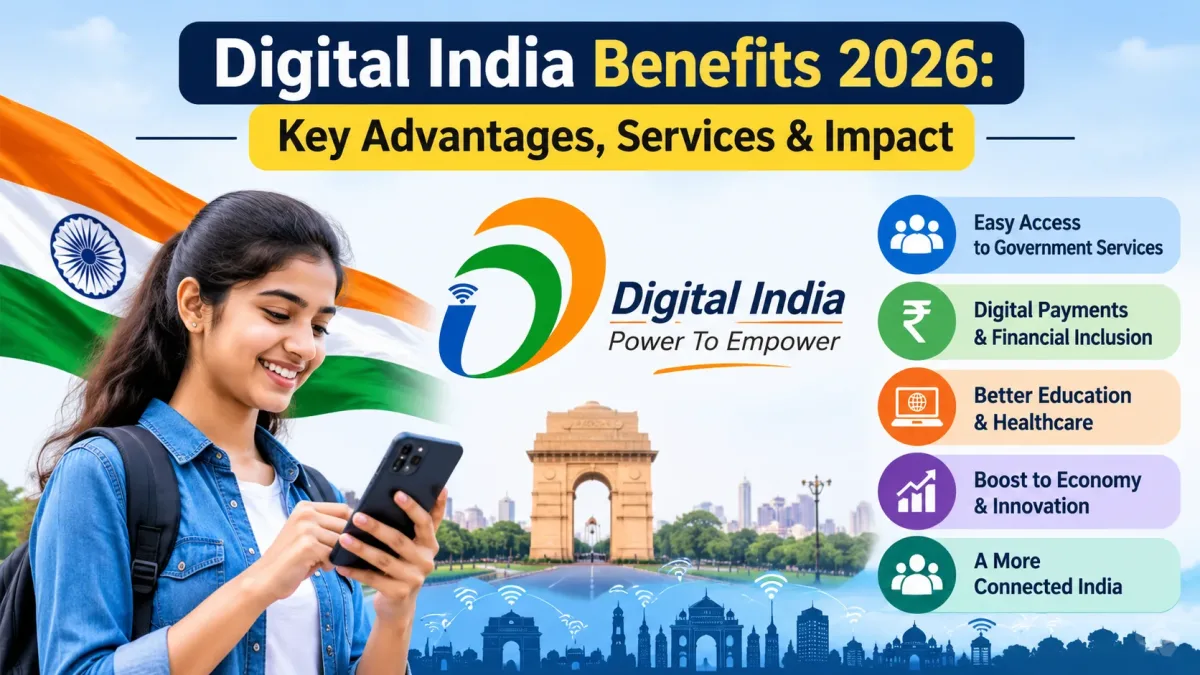
Imagine downloading an important document without visiting a government office, paying a shopkeeper by scanning a QR code, attending an online class from your village, or applying for a government service using your smartphone. These activities have become part of everyday life for many Indians, thanks to the country's growing digital ecosystem.
The Digital India programme was launched by the Government of India in July 2015 to make the country a digitally empowered society and a knowledge-based economy. Its broader vision is to improve digital infrastructure, expand access to online government services and help citizens use technology in their daily lives.
In 2026, digital platforms continue to play an important role in banking, education, healthcare, public services and business. However, Digital India is not simply about using smartphones or accessing the internet. It is also about making useful services easier to reach, including for people living in rural and underserved areas.
In this article, we will explore the major Digital India benefits in 2026, important initiatives, opportunities for students and job seekers, and ways citizens can use digital services safely.
What Is the Digital India Programme?
Digital India is a flagship programme of the Government of India coordinated by the Ministry of Electronics and Information Technology (MeitY). It brings together multiple initiatives designed to improve internet access, digital service delivery, digital literacy and technology-driven development.
The programme is built around three broad vision areas:
- Digital infrastructure for every citizen: Improving access to internet connectivity and essential digital infrastructure.
- Governance and services on demand: Making government services more accessible through online platforms.
- Digital empowerment of citizens: Helping people access information, digital resources and services more confidently.
Digital India includes a range of initiatives rather than a single application or scheme. The services available to an individual depend on the relevant platform, eligibility conditions, state rules and programme guidelines.
Official information is available on the Digital India website and the MeitY website.
Top Digital India Benefits in 2026
1. Easy Access to Government Services
One of the most practical benefits of Digital India is that citizens can access many government services online. Depending on the department and service, people may be able to submit applications, check application status, download documents or receive updates without making repeated visits to an office.
For example, the UMANG platform brings together services from participating central and state government departments. Citizens can use it to discover available services and access them through a website or mobile application.
This can save time, reduce travel expenses and make routine administrative tasks more convenient. However, not every service is fully online, and some applications may still require physical verification or an in-person visit.
Visit the official UMANG portal to explore available services.
2. Faster and More Convenient Digital Payments
Digital payments have changed how people pay for groceries, travel, food, shopping and other everyday expenses. Payment systems such as the Unified Payments Interface (UPI) allow users to transfer money between supported bank accounts through compatible applications.
Small businesses, street vendors and local shops can also accept digital payments without depending entirely on cash. For customers, digital transactions can make payments convenient and provide a transaction record.
Nevertheless, digital payments require care. Users should never share their UPI PIN, OTP or banking password with another person. A UPI PIN is generally used to authorise a payment, not to receive money. Always check the recipient and amount before approving a transaction.
3. Digital Documents Through DigiLocker
Keeping physical copies of certificates and identity documents can be inconvenient, particularly for students and job seekers who apply for several opportunities. DigiLocker helps users access eligible digital documents issued by participating authorities.
Depending on availability, users may be able to access documents such as educational certificates, driving licences and vehicle registration records. Digitally issued documents can be useful when applying for education, employment or selected government services that accept them.
Users should remember that uploading a photograph or scan of a document is not necessarily the same as obtaining an authentic document directly from its issuing authority. Check the requirements of the organisation requesting the document.
To learn more, visit the official DigiLocker website.
4. Better Opportunities for Online Education
Digital platforms have made educational resources easier to access for many students. Learners can use online courses, recorded lectures, educational videos and digital learning materials to develop their knowledge beyond the classroom.
This is particularly helpful for students who want to prepare for competitive examinations, improve communication skills, learn programming or explore a new subject at their own pace.
Students should check the credibility of course providers, course fees, eligibility requirements and certificate conditions before enrolling. Not every online course is free, and completing a course does not automatically guarantee a job or admission.
For students in areas with limited connectivity, digital learning can still be challenging. Affordable internet, suitable devices and access to local learning facilities remain important.
5. More Opportunities for Digital Skills and Employment
As businesses and public institutions adopt digital tools, practical technology skills are becoming increasingly valuable. Digital India supports a wider ecosystem in which people can explore digital literacy, online learning, technology services and employment-related opportunities.
Students and freshers can use online resources to develop skills such as:
- Computer fundamentals and digital literacy
- Programming and web development
- Data analysis and spreadsheet tools
- Cybersecurity awareness
- Digital marketing and content creation
- Communication and online collaboration
These skills may help learners prepare for internships, entry-level jobs, freelance projects or small business activities. Actual employment outcomes depend on an individual's skills, experience, qualifications and the needs of employers.
Anyone exploring a training programme should verify the course provider, syllabus, fees, certificate details and placement claims before paying or sharing personal information.
6. Improved Access to Digital Services in Rural Areas
Access to reliable internet can make a meaningful difference in rural communities. It can help people discover government information, communicate with service providers, access learning resources and explore online business opportunities.
BharatNet is an important initiative intended to improve broadband connectivity in rural India by connecting Gram Panchayats and supporting wider digital access. The availability and quality of connectivity can still differ from one location to another.
Common Service Centres (CSCs) also help people access selected digital and public services, particularly where residents may not have a suitable device, reliable internet connection or the confidence to complete an online process independently.
Depending on the centre and service, citizens may receive assistance with government applications, banking-related services, utility payments and other digital transactions. Service availability and applicable charges should be confirmed locally.
7. Greater Convenience in Healthcare
Digital technology can help people find health information, access selected online health services and connect with healthcare professionals through supported telemedicine facilities. Digital systems can also assist with appointment management and the handling of eligible health records.
For people living far from large hospitals, remote consultations may offer a convenient way to seek initial medical guidance when the service is appropriate and available.
However, online consultations cannot replace every physical examination, diagnostic test or emergency treatment. Patients should use recognised healthcare services and protect the privacy of their medical information.
8. Support for Small Businesses and Entrepreneurs
Digital tools can help small businesses reach customers beyond their immediate neighbourhood. Shop owners, home-based businesses and independent professionals can use online platforms to promote products, communicate with customers, accept digital payments and maintain business records.
Digital access can also make it easier to discover business information, government resources and online marketplaces. For some entrepreneurs, these tools can reduce the need for a costly physical presence in every market they want to serve.
However, success is not automatic. Business owners still need a good product or service, customer trust, reliable delivery, sound financial management and an understanding of online fraud risks.
9. More Transparent and Convenient Public Services
Online application systems and digital records can make some government processes easier to track. Where a service provides application numbers, status updates or electronic receipts, citizens may find it simpler to follow their requests and keep a record of transactions.
Digital systems can also reduce paperwork and repeated data entry in some processes. The actual experience depends on how effectively each department implements its services, maintains its systems and responds to users.
Digital delivery should therefore be viewed as an ongoing improvement rather than a guarantee that every process will always be fast or error-free.
10. Better Access to Information and Citizen Participation
The internet gives citizens more ways to access official announcements, public information, government services and educational resources. Online platforms can also help people participate in discussions and provide feedback on public initiatives.
Before acting on a message about a government scheme, recruitment drive or financial benefit, citizens should verify the information through an official website or authorised department. This is especially important when a message asks for payment, banking details or identity documents.
Important Digital India Initiatives You Should Know
Several digital platforms and infrastructure initiatives contribute to India's digital ecosystem. The following examples illustrate how citizens may benefit.
Initiative Main Purpose Potential Benefit UMANG Access to participating government services Convenient access to services through a common platform DigiLocker Access to eligible digital documents Less dependence on carrying physical documents where digital versions are accepted UPI Instant bank-to-bank digital payments through supported services Convenient payments and money transfers BharatNet Rural broadband infrastructure Supports internet connectivity and digital service access Common Service Centres Assistance with selected digital and public services Helps people who need support accessing online services Digital literacy and skilling initiatives Build digital capabilities Helps learners use technology and explore further trainingThese initiatives have different purposes and eligibility rules. For the latest details, visit the relevant official portal rather than relying on an unofficial list of schemes.
How Can Students and Job Seekers Benefit from Digital India?
Students and job seekers can make practical use of digital resources without waiting for a special opportunity. Here are some useful steps to get started:
- Learn a useful digital skill: Choose a skill based on your career goals, such as programming, spreadsheets, communication or digital marketing.
- Explore trusted learning resources: Check recognised educational platforms and government-supported training initiatives.
- Keep eligible documents accessible: Use DigiLocker where supported and make sure your details are accurate.
- Search for opportunities carefully: Check official recruitment notices, employer websites and verified internship listings.
- Build practical experience: Create projects, complete relevant assignments and document your work.
- Protect your online identity: Use strong passwords, enable additional account security where available and avoid suspicious links.
For students, the biggest benefit is not simply having access to the internet. It is learning to use digital tools to solve problems, improve skills and make informed decisions.
Challenges and Limitations of Digital India
Despite its benefits, digital transformation still faces several challenges. Internet access and network quality are not the same everywhere, and some people cannot afford a suitable smartphone or computer.
Digital literacy is another important concern. A person may have internet access but still find it difficult to complete an online form, identify a fake website or understand a digital payment process. Services must also consider accessibility, language preferences and the needs of people with disabilities.
Cybersecurity and privacy deserve equal attention. Fraudulent calls, fake job offers, phishing links and requests for OTPs or payment details can put users at risk. Citizens should use official portals, verify website addresses and avoid sharing sensitive information unnecessarily.
For Digital India to benefit more people, technology must be supported by reliable connectivity, accessible services, digital education, effective grievance support and responsible data protection.
How to Use Digital India Services Safely
- Visit official government websites or verified applications.
- Check the website address before entering personal information.
- Never disclose your OTP, UPI PIN, banking password or account recovery codes to strangers.
- Do not pay an unknown person who promises a guaranteed government job, certificate or benefit.
- Read eligibility rules, fees and terms before applying for a service or course.
- Keep your phone, browser and applications updated.
- Report suspicious financial activity to your bank and the appropriate official reporting channel as quickly as possible.
Frequently Asked Questions (FAQs)
1. What are the main benefits of Digital India in 2026?
The major benefits include easier access to selected government services, digital payments, online learning, digital documents, improved rural connectivity, digital skills development and new possibilities for businesses and entrepreneurs.
2. Who can benefit from the Digital India programme?
Citizens across India may benefit from the programme's digital infrastructure and services. The eligibility requirements depend on the particular service, scheme or platform being used.
3. Is Digital India a single government scheme?
No. Digital India is a broad programme that includes multiple initiatives related to digital infrastructure, governance, public service delivery, digital literacy and technology development.
4. Can students benefit from Digital India?
Yes. Students can use digital learning resources, explore skill-development opportunities, access eligible digital documents and search for internships or employment opportunities online.
5. Is every service under Digital India free?
No. Some services or resources may be free, while others may involve application fees, service charges, course fees or other costs. Always check the terms on the relevant official portal.
6. How does Digital India help people in rural areas?
Initiatives supporting broadband connectivity, digital literacy and Common Service Centres can help rural residents access online information and selected government, banking and other services.
7. Where can I find official information about Digital India?
You can start with the Digital India official website and the Ministry of Electronics and Information Technology website. For a specific service, use the official portal operated by the responsible department.
Final Thoughts and Key Takeaways
The benefits of Digital India in 2026 can be seen in the way people access information, make payments, store documents, learn new skills and interact with public services. Digital platforms can save time, improve convenience and open new possibilities for students, job seekers, rural communities and small businesses.
At the same time, access to technology alone is not enough. Reliable internet, digital literacy, online safety, privacy and accessible services are essential if the benefits are to reach more people.
If you are a student or job seeker, start by learning practical digital skills, exploring trusted resources and using online services responsibly. Small steps can help you make better use of the opportunities available in an increasingly digital India.
Stay connected with TechNaukary for updates on government schemes, technology, internships, skill-development programmes and career opportunities. Always verify important announcements through official sources before applying.
```