The 6 Certifications That Beat a Four-Year Degree in 2027
A traditional degree is not the only way to build a successful career. Discover six industry-recognised certifications that can help you develop practical skills, demonstrate your knowledge and stand out in the 2027 job market.
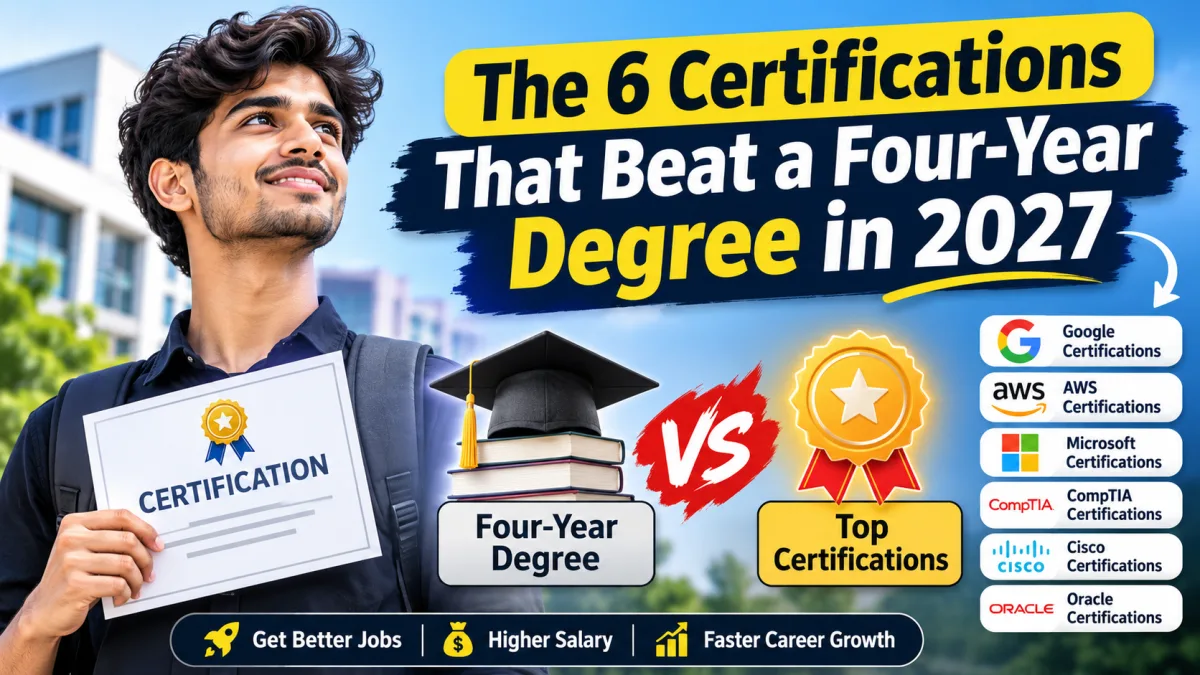
For many years, students have followed a familiar path: complete school, earn a four-year college degree, and then start looking for a job. A university qualification is still valuable, but the professional world is changing. Employers are increasingly interested in what candidates can actually do, how well they understand modern tools, and whether they can solve problems in a real working environment.
This change has created new opportunities for people who cannot afford an expensive college education, want to change careers, or simply prefer learning through practical training. Instead of spending several years studying a broad academic programme, they can focus on a specific skill and earn an industry-recognised certification.
That does not mean a certificate automatically makes someone more qualified than a graduate. A medical professional, lawyer, teacher or researcher may need a recognised degree and formal licensing. However, in certain technology and business roles, a relevant certification combined with practical experience can be a strong alternative to a traditional educational route.
If you are planning your career for 2027, here are six certifications worth exploring. Each one focuses on a different professional area and can help you demonstrate skills that employers understand.
Why Certifications Are Becoming Important in 2027
Technology is changing the way businesses operate. Companies are adopting cloud platforms, improving cybersecurity, using data to make decisions and automating everyday tasks. As a result, professionals need to keep updating their skills.
A traditional degree provides a broad educational foundation, but a specialised certification can show that you have studied a particular technology or professional skill. Many certification programmes also include practical exercises, assessments and projects.
There are several reasons why certifications are becoming attractive to students and job seekers:
- Focused learning: You can concentrate on one career area instead of studying subjects that may not be relevant to your target role.
- Industry relevance: Many certifications are designed around specific platforms, tools and job responsibilities.
- Flexible preparation: Online learning makes it possible to study alongside college, work or other responsibilities.
- Career switching: Certifications can help professionals demonstrate that they are developing skills for a new field.
- Resume improvement: A relevant credential can give recruiters another way to evaluate your knowledge.
The most important point is to select a certification that matches the work you want to do. Collecting certificates without learning the skills behind them will not create a strong career profile.
1. Google Career Certificates
Best for: Beginners interested in IT support, data analytics, cybersecurity, digital marketing and project management.
Google Career Certificates are a practical starting point for people who want to explore professional careers without having previous experience in the subject. These online programmes are designed to introduce learners to job-related concepts through structured lessons and practical activities.
Depending on your interests, you can explore areas such as:
- Google IT Support Certificate
- Google Data Analytics Certificate
- Google Cybersecurity Certificate
- Google Digital Marketing and E-commerce Certificate
- Google Project Management Certificate
- Google UX Design Certificate
What will you learn?
The learning experience depends on the programme you select. For example, a data analytics learner may study spreadsheets, SQL, data cleaning and visualisation. Someone interested in IT support can learn about computer hardware, operating systems, networking and troubleshooting.
These programmes are particularly useful for students, freshers and career changers who need a structured introduction to a professional field.
Career opportunities
- IT Support Specialist
- Junior Data Analyst
- Cybersecurity Analyst Trainee
- Digital Marketing Executive
- Project Coordinator
- Junior UX Designer
Official website: Google Career Certificates – India
Google states that many of its Career Certificates can be started without prior experience and are self-paced. The programme's India page also provides information about learning options, costs and available certificate subjects. Check the current details before enrolling.
2. AWS Certified Solutions Architect – Associate
Best for: Students and professionals interested in cloud computing, software development and cloud architecture.
Cloud computing has become an important part of modern business technology. Organisations use cloud platforms to host websites, run applications, store information and manage digital services. This has created opportunities for people who understand how cloud infrastructure works.
The AWS Certified Solutions Architect – Associate certification is designed to validate knowledge of designing solutions on Amazon Web Services (AWS). It covers important areas of cloud architecture and helps candidates demonstrate that they understand how different AWS services work together.
What will you learn?
- Cloud computing fundamentals
- Designing reliable cloud architectures
- Storage and database services
- Networking and security basics
- Scalability and performance considerations
- Cost optimisation and infrastructure planning
Career opportunities
- Cloud Support Associate
- Junior Cloud Engineer
- Cloud Solutions Associate
- DevOps Engineer Trainee
- Cloud Infrastructure Analyst
This certification is more useful when combined with practical AWS experience. Build a small project, deploy an application, configure cloud storage or experiment with a basic serverless application. Such work gives you something meaningful to discuss during interviews.
Official website: AWS Certification
AWS recommends prior cloud or IT experience for associate-level certifications. Beginners may prefer starting with foundational cloud learning before attempting the associate examination.
3. ISC2 Certified in Cybersecurity (CC)
Best for: Beginners who want to enter cybersecurity and information security.
Cybersecurity is no longer limited to large technology companies. Banks, hospitals, educational institutions, government departments and online businesses all need to protect their systems and information.
As organisations depend more heavily on digital services, they also need people who understand security risks, access controls, incident response and basic network protection.
The ISC2 Certified in Cybersecurity (CC) certification is designed for individuals who are new to the field. It provides a foundation in important cybersecurity concepts without requiring previous professional cybersecurity experience.
What will you learn?
- Security principles
- Access control concepts
- Network security fundamentals
- Security operations
- Incident response basics
- Business continuity and disaster recovery concepts
Career opportunities
- Junior Cybersecurity Analyst
- Security Operations Centre (SOC) Analyst Trainee
- IT Security Support Associate
- Information Security Assistant
- Cybersecurity Intern
This is a useful starting point, not a guarantee of employment. Cybersecurity employers often look for practical knowledge of operating systems, networking, security tools and real-world problem-solving. You can strengthen your profile by practising in authorised labs and documenting what you learn.
Official website: ISC2 Certified in Cybersecurity
Always check the current examination, training and pricing arrangements on the official ISC2 website. Earlier free-training initiatives may have specific deadlines or eligibility conditions, so do not assume that an old offer is still available.
4. Microsoft Certified: Azure Administrator Associate
Best for: IT graduates, system administrators and aspiring cloud professionals.
Microsoft Azure is a cloud computing platform used by businesses to manage applications, databases, virtual machines, networks and other digital resources.
The Microsoft Certified: Azure Administrator Associate certification is designed for people who want to demonstrate their ability to manage and maintain Azure environments. It is more suitable for learners who already have some knowledge of IT infrastructure and cloud concepts.
What will you learn?
- Managing identities and governance
- Configuring virtual networks
- Managing storage and computing resources
- Monitoring cloud environments
- Backup and recovery concepts
- Using Azure tools and administrative services
Career opportunities
- Azure Administrator
- Cloud Operations Associate
- Cloud Support Engineer
- Infrastructure Administrator
- Junior Cloud Engineer
One advantage of learning Azure is that you can practise through cloud-based exercises and build a portfolio of infrastructure tasks. For example, you could configure a virtual network, deploy a virtual machine, manage user access and monitor resources.
Official website: Microsoft Azure Administrator Associate
Microsoft identifies this as an intermediate-level certification. Its requirements and renewal arrangements can change, so review the official certification page before preparing for the exam.
5. Cisco Certified Network Associate (CCNA)
Best for: Students interested in computer networks, networking support and IT infrastructure.
Every organisation that uses computers, servers and online applications depends on networks. From connecting office computers to maintaining large enterprise infrastructure, networking professionals help ensure that systems communicate securely and reliably.
The Cisco Certified Network Associate (CCNA) certification is a recognised credential for people who want to develop networking knowledge. It covers important networking concepts along with security and automation fundamentals.
What will you learn?
- Network fundamentals
- Network access and switching
- IP connectivity and routing
- IP services
- Security fundamentals
- Automation and programmability
Career opportunities
- Network Support Engineer
- Network Administrator
- IT Infrastructure Associate
- Technical Support Engineer
- Junior Network Engineer
CCNA preparation becomes much more valuable when you practise configuring routers and switches in network simulation environments. Understanding how networks work is more important than simply remembering examination answers.
Official website: Cisco CCNA Certification
Important for 2027: Cisco has announced an update to the CCNA examination. The final date for the current v1.1 exam is February 2, 2027, and the first date for the v2.0 exam is February 3, 2027. Candidates planning their preparation should check the updated official exam topics.
6. Salesforce Platform Administrator Certification
Best for: People interested in CRM, business operations, sales technology and customer relationship management.
Not every technology career requires advanced programming skills. Many companies use customer relationship management (CRM) platforms to organise customer information, manage sales activities, track service requests and improve business processes.
Salesforce is one of the major platforms used for these activities. Its Platform Administrator certification is designed to validate knowledge of configuring and managing the Salesforce platform.
What will you learn?
- Salesforce platform configuration
- Managing users and access permissions
- Data management and reporting
- Customising objects and applications
- Automation and workflow concepts
- Sales and service application features
Career opportunities
- Salesforce Administrator
- CRM Executive
- Sales Operations Associate
- Business Systems Analyst
- CRM Support Specialist
This certification may suit people who enjoy organising information, improving business processes and working with software platforms. It can also be a useful option for graduates from commerce, management and other non-computer-science backgrounds.
Official website: Salesforce Platform Administrator Certification
Salesforce provides learning resources through Trailhead. Before booking an examination, review the current exam topics and gain practical experience with the platform.
Quick Comparison: Which Certification Should You Choose?
Certification Best For Career Direction Level Google Career Certificates Beginners and career changers IT, data, marketing, UX and project management Beginner-friendly AWS Solutions Architect – Associate Cloud enthusiasts Cloud computing and architecture Associate ISC2 Certified in Cybersecurity Cybersecurity beginners Information security Entry-level Microsoft Azure Administrator Associate IT and infrastructure learners Cloud administration Intermediate Cisco CCNA Networking learners Networking and infrastructure Associate-level Salesforce Platform Administrator CRM and business technology learners CRM administration and business systems Professional role-focusedNote: The level descriptions are general guidance, not a direct comparison of examination difficulty. Check each provider's current prerequisites, fees, exam format and renewal rules before enrolling.
Can Certifications Really Beat a Four-Year Degree?
The answer depends on the career you want to pursue.
In some technology and business roles, employers may focus more on relevant skills, experience and the ability to perform specific tasks. A candidate with a recognised certification, a strong project portfolio and practical experience may be a better match for a particular opening than someone who has a degree but has never worked with the required tools.
For example, a person applying for a cloud support position may benefit from demonstrating practical knowledge of AWS or Azure. A networking candidate may stand out by showing CCNA-level knowledge and hands-on configuration experience.
However, there are important limitations. Many employers still require a bachelor's degree for graduate recruitment, management development programmes or roles with formal educational requirements. Certain professions also legally require recognised degrees, licences or registration.
Therefore, it is more accurate to say that certifications can compete with a degree for selected roles, rather than claiming that they replace university education everywhere.
How to Choose the Right Certification for Your Career
Before paying for a course or examination, spend some time understanding your career goals. The most popular certification is not necessarily the right one for you.
1. Start with the job role
Search for job descriptions related to the position you want. Identify the technologies, tools and skills that appear repeatedly. This will help you choose a certification that is relevant to actual job requirements.
2. Check the official syllabus
Do not enrol just because an advertisement promises a high-paying job. Visit the certification provider's official website and understand what the examination covers.
3. Consider the total cost
Some programmes have subscription fees, while others require separate examination payments. Also consider the cost of practice tests, learning resources and possible retakes. Compare the complete cost before making a decision.
4. Build practical projects
A certificate proves that you completed an assessment. A project helps demonstrate how you apply your knowledge. Create something relevant to your chosen field and document the process.
5. Keep your skills updated
Technology changes quickly. Some certifications require renewal, continuing education or updated examinations. Make sure you understand these requirements and keep learning after receiving the credential.
How to Make Your Certification Valuable to Employers
Completing a certification is only one part of preparing for a job. You also need to show employers what you can do with the knowledge you gained.
Here are some practical steps that can improve your profile:
- Add the credential to your resume: Mention the certification name, issuing organisation and completion date.
- Include practical work: Add relevant projects, labs, assignments or demonstrations.
- Update LinkedIn: Add the credential to the Licenses and Certifications section.
- Prepare for technical interviews: Practise explaining concepts instead of memorising definitions.
- Apply for suitable entry-level roles: Look for internships, trainee positions and junior openings that match your current skills.
- Build communication skills: Learn to explain technical problems and describe how you solved them.
For example, someone completing an AWS certification could build and deploy a small web application. A cybersecurity learner could document a basic security lab. A Salesforce learner could practise configuring a sample CRM workflow.
These examples give recruiters something more concrete to evaluate than a certificate alone.
Frequently Asked Questions (FAQs)
1. Can certifications replace a four-year degree in 2027?
Certifications can help candidates qualify for or compete for selected roles, particularly in technology and business operations. However, they do not replace degrees in every profession or where employers and regulations require formal qualifications.
2. Which certification is best for beginners in 2027?
Google Career Certificates and ISC2 Certified in Cybersecurity are useful starting points for beginners exploring professional skills. The right option depends on whether you are interested in IT, data analytics, cybersecurity, marketing or another field.
3. Can I get a job with a certification but no work experience?
It is possible, but not guaranteed. Entry-level jobs, internships and trainee positions may consider candidates with relevant certifications. Building projects, practising practical tasks and improving interview skills can strengthen your application.
4. Are online certifications recognised by companies?
Many online certifications are recognised by employers, particularly when they are issued by established technology companies or professional organisations. Recognition varies by employer, industry and job role.
5. Which certification is best for cloud computing?
AWS Certified Solutions Architect – Associate and Microsoft Certified: Azure Administrator Associate are relevant options for people interested in cloud computing. Choose based on the platform used by the companies and roles you are targeting.
6. Is CCNA useful for freshers?
Yes. CCNA can help freshers develop and demonstrate networking knowledge. Practical experience with network simulation tools and basic troubleshooting can make the certification more useful when applying for entry-level networking jobs.
7. Are Google Career Certificates free in India?
Not necessarily. Google lists subscription-based learning options and other details on its India website. Scholarships or special offers may also be available through specific programmes. Always verify the current price and eligibility before enrolling.
8. Should I complete multiple certifications at the same time?
It is usually better to focus on one relevant certification at a time. Understand the subject, practise the skills and complete a project before moving to another credential.
9. Do certifications guarantee a high salary?
No. Salary depends on your skills, experience, location, employer, role and interview performance. A certification can support your profile, but it cannot guarantee a particular salary or job offer.
10. What matters more: a degree, certification or skills?
It depends on the profession. A degree may be essential for some careers, while practical skills and relevant certifications can carry significant weight in others. The strongest profile often combines education, demonstrable skills and real experience.
Final Thoughts and Key Takeaways
The career landscape in 2027 offers more than one route to professional success. A four-year degree remains an important qualification, but it is no longer the only way to demonstrate your abilities in every industry.
Certifications from Google, AWS, ISC2, Microsoft, Cisco and Salesforce can help learners develop focused knowledge in areas such as cloud computing, cybersecurity, networking, data analytics and business technology.
Still, remember that the certificate itself is not the final achievement. What matters is the knowledge you gain, the projects you complete and your ability to apply those skills when solving real problems.
If you are a student or fresher, start with one career direction. Choose a suitable certification, follow the official learning path, practise consistently and build a small portfolio. You do not need to collect ten certificates to impress an employer. One relevant credential supported by genuine skills can be far more meaningful.
At TechNaukary, we aim to help students, freshers and job seekers discover useful learning opportunities, career guidance and industry updates. Keep learning, stay curious and take practical steps towards the career you want.